Are Builder Mortgage Rate Buydowns Really Worth It? What to Know Before You Sign
Homebuilders are offering rate buydowns and incentives to attract buyers in a slower market. Here is how to evaluate them honestly before you sign anything.
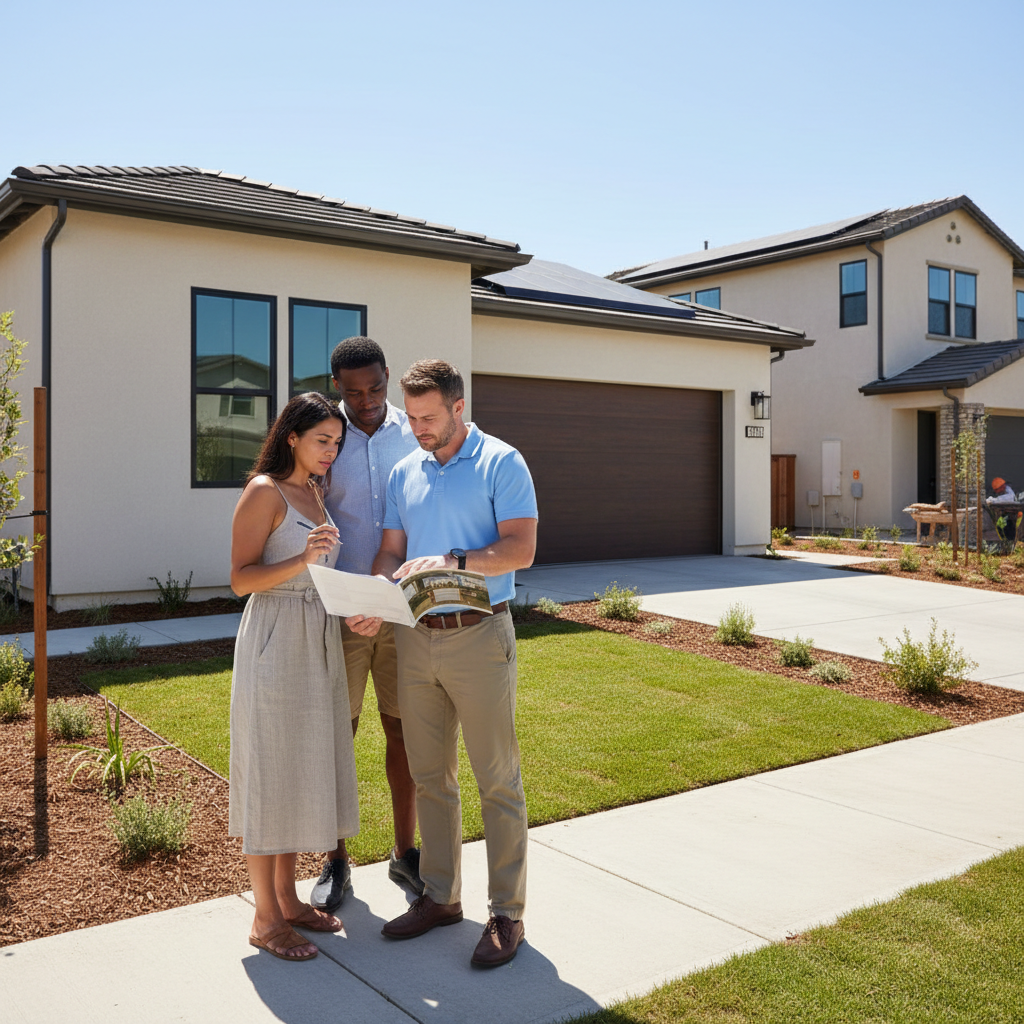
If you have been shopping for a new construction home in Southern California, you have probably seen the offers: "3.99% for the first year," "we'll buy down your rate," "special financing available through our preferred lender." Homebuilders have been using mortgage rate buydowns and financing incentives aggressively in 2026 to attract buyers in a slower market.
Some of these offers are genuinely valuable. Some are structured in ways that benefit the builder more than the buyer. Here is how to evaluate them honestly.
What a Rate Buydown Actually Is
A mortgage rate buydown is a mechanism for reducing the interest rate on a mortgage, either temporarily or permanently, by paying money upfront. The money comes from somewhere — either the buyer, the seller (in this case the builder), or both.
There are two main types:
Temporary buydowns reduce your rate for a defined period at the beginning of the loan, then return to the full note rate. The most common structure is the 2-1 buydown: your rate is reduced by 2 percentage points in year one and 1 percentage point in year two, then returns to the full rate in year three and for the remainder of the loan. A 1-0 buydown reduces the rate by 1 point in year one only.
The cost of a temporary buydown is deposited into an escrow account at closing and used to subsidize your payments during the buydown period. When a builder offers a temporary buydown, they are typically funding this escrow account as a seller concession.
Permanent buydowns (discount points) reduce your rate for the life of the loan. One discount point equals 1% of the loan amount and typically reduces the rate by approximately 0.25%, though the exact reduction varies by lender and market conditions. See our article on whether to pay mortgage points to buy down your rate for a detailed breakdown of how permanent buydowns work.
How Builder Buydown Offers Are Structured
When a builder offers a rate buydown, they are typically offering it as a concession — money the builder contributes at closing to fund the buydown. This is a legitimate and common practice. The builder is essentially reducing the effective cost of the home by a specific dollar amount, expressed as a rate reduction rather than a price reduction.
The key question is: what is the builder actually contributing, and what are you getting for it?
Example of a transparent offer: A builder offers a 2-1 buydown on a $750,000 home. The note rate is 7.0%. Year one rate: 5.0%. Year two rate: 6.0%. Year three and beyond: 7.0%. The cost to fund this buydown is approximately $15,000–$18,000 (the present value of the payment difference over the buydown period), which the builder contributes as a closing cost credit.
This is a real benefit. The buyer's payment in year one is meaningfully lower, providing cash flow relief during the early years of homeownership.
What to watch for: The builder's contribution to the buydown is only valuable if the note rate (the rate you pay from year three onward) is competitive. If the builder's affiliated lender is offering a note rate that is 0.25%–0.50% higher than what you could get from an independent lender, the buydown may be partially or fully offset by the higher underlying rate.
The Builder-Affiliated Lender Question
Most large homebuilders have affiliated mortgage companies or preferred lender relationships. They often require — or strongly incentivize — buyers to use their affiliated lender to receive the buydown or other financing incentives.
This is where buyers need to be careful.
Builder-affiliated lenders are not always the most competitive. They may offer rates that are slightly above market, knowing that the buydown incentive makes the offer look attractive even if the underlying pricing is not the best available. The incentive is real, but it may be partially funded by a higher rate.
What to do: Before committing to a builder's affiliated lender, get a competing quote from an independent lender or mortgage broker for the same loan amount, loan type, and term — without the buydown. Compare the note rates. If the builder's affiliated lender's note rate is significantly higher than the independent quote, calculate whether the buydown benefit exceeds the long-term cost of the higher rate.
Your right to shop: Under RESPA (the Real Estate Settlement Procedures Act), a builder cannot legally require you to use their affiliated lender as a condition of purchasing the home. They can offer incentives for using their lender, but they cannot make it a requirement. If a builder tells you that you must use their lender to buy the home, that is a RESPA violation worth reporting to the CFPB.
Running the Numbers on a Temporary Buydown
The most important question about a temporary buydown is: what happens in year three?
A 2-1 buydown gives you lower payments for two years. In year three, your payment jumps to the full note rate and stays there for the remaining 28 years of a 30-year mortgage. If you cannot comfortably afford the year-three payment, the buydown has not solved your affordability problem — it has deferred it.
Qualification note: Lenders qualify you at the note rate, not the buydown rate. Even with a 2-1 buydown that gives you a 5% rate in year one, your debt-to-income ratio is calculated at the 7% note rate. This is intentional — it ensures you can afford the payment when the buydown expires.
The break-even question: If the builder is offering a temporary buydown as a concession, ask whether you could instead take the same dollar amount as a price reduction or a credit toward closing costs. A $15,000 price reduction reduces your loan balance permanently and saves you interest over the life of the loan. A $15,000 buydown saves you money for two years and then expires. Depending on your situation, the price reduction may be more valuable.
What to Ask the Builder
Before accepting a builder's financing incentive:
- What is the note rate? (The rate you pay from year three onward, not the buydown rate)
- What is the total dollar value of the builder's contribution? (The actual cash going into the buydown escrow or toward closing costs)
- Can I take the same contribution as a price reduction instead?
- Am I required to use your affiliated lender, or is this incentive available with any lender?
- What is the APR on this loan? (APR includes fees and gives a more complete picture of the loan's cost than the interest rate alone)
- What will my payment be in year three at the note rate?
A builder or lender who cannot or will not answer these questions clearly is a red flag.
The Bottom Line
Builder rate buydowns can be a genuine benefit — particularly when the builder is contributing real money to fund the buydown and the note rate is competitive. In a slower market where builders are motivated to close sales, some of these offers represent real value.
But they require scrutiny. The note rate matters more than the buydown rate. The builder's affiliated lender may not be the most competitive option. And a temporary buydown that makes year one affordable but leaves year three unaffordable is not a solution.
If you are evaluating a new construction purchase with a builder financing incentive and you want an independent assessment of whether the offer is competitive, contact us or schedule a call. Getting a second opinion on a builder's financing package costs you nothing and can save you a significant amount over the life of the loan.
NMLS Individual #1087365 · NMLS Company #1147207 · CA DRE #01265685. SMS Mortgage is a licensed mortgage broker in California and Colorado. Stephanie Pedley holds individual MLO authorizations in Texas through B Walters CO., LLC (NMLS #262157), Ohio through Beacon of Hope Residential LLC (NMLS #2543671), and Nevada through CASMIA HOLDING LLC (NMLS #1740673). Not a commitment to lend. All loans subject to credit approval.
Explore Topics

Written by
Stephanie Pedley
Mortgage professional and real estate broker with 34+ years of experience in lending, underwriting, and loan strategy. SMS Mortgage is licensed in California and Colorado. Stephanie Pedley holds individual MLO authorizations in Texas, Ohio, and Nevada through sponsorship arrangements. NMLS Individual #1087365 · NMLS Company #1147207 · CA DRE #01265685.