Builder Offering a 2-1 Mortgage Rate Buydown? Read This Before Choosing Their Lender
Builder incentives like a 2-1 buydown can look attractive, but the first-year payment isn't the whole story. Here is how to compare the real costs.

Builder Offering a 2-1 Mortgage Rate Buydown? Read This Before Choosing Their Lender
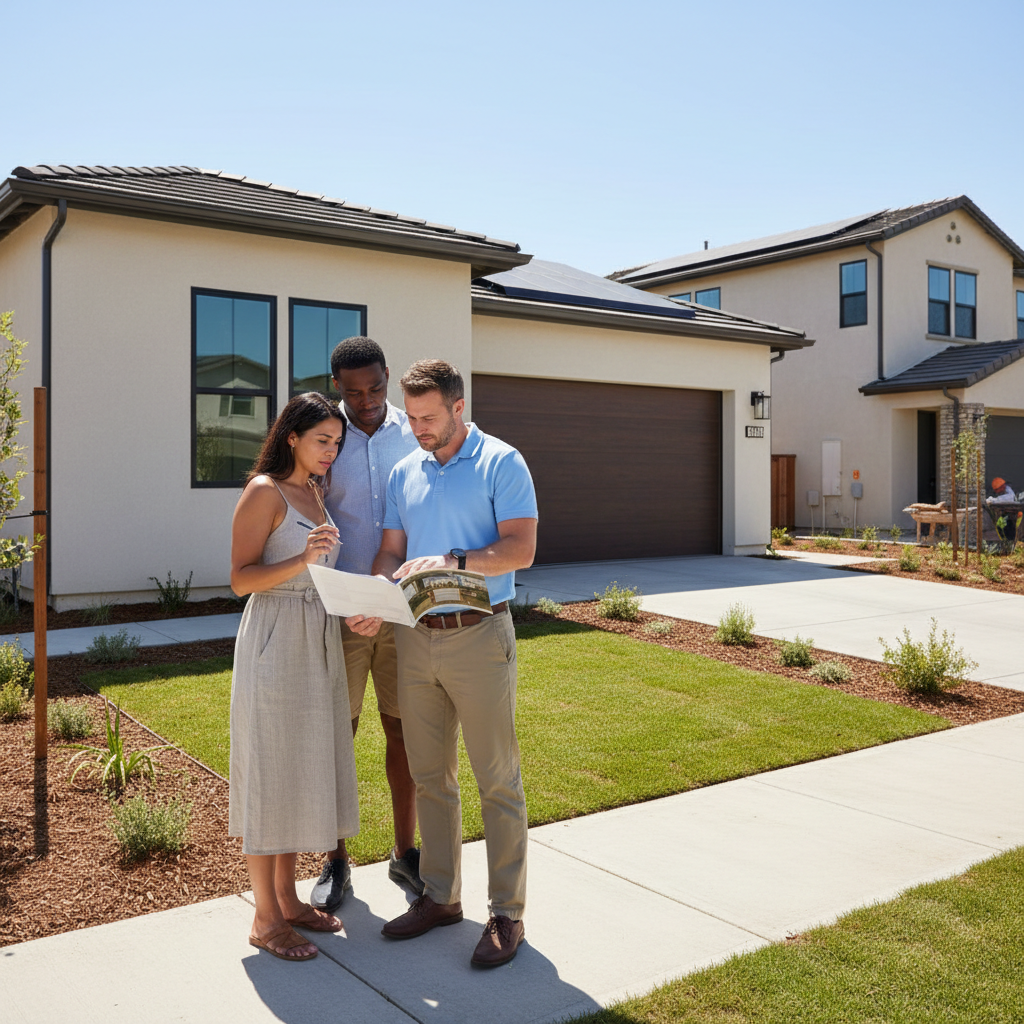
You're touring a beautiful new-construction community.
The model home is stunning.
Then the sales representative mentions a financing incentive.
If you use the builder's preferred mortgage lender, you may qualify for a temporary rate buydown, closing cost credit, or another promotional offer.
Suddenly, the financing sounds dramatically more attractive.
But how do you determine whether the incentive is actually a good deal?
Recent first-time-homebuyer discussions have featured exactly this question, with buyers comparing builder-funded buydowns against offers from independent lenders.
The answer depends on much more than the advertised first-year payment.
Before choosing a mortgage based on a builder incentive, understand what the financing costs today—and what it will cost after the promotion ends.
What Is a 2-1 Mortgage Buydown?
A 2-1 temporary buydown reduces the borrower's effective payment rate for a limited period.
Typically, during the first year, the payment is calculated using a rate two percentage points below the permanent note rate.
During the second year, it's calculated using a rate one percentage point below the note rate.
Beginning in the third year, the borrower pays the full scheduled principal-and-interest amount based on the note rate.
The temporary payment reduction is generally funded through a buydown subsidy arrangement.
The important distinction is that the permanent note rate doesn't become permanently lower just because the first two years have reduced payments.
Here's What That Could Look Like
Consider a hypothetical $400,000, 30-year fixed mortgage with a permanent note rate of 6.50%.
Assume the transaction includes a properly structured 2-1 temporary buydown.
| Period | Rate used for borrower payment | Approximate monthly P&I paid by borrower |
|---|---|---|
| Year 1 | 4.50% | $2,027 |
| Year 2 | 5.50% | $2,271 |
| Year 3 onward | 6.50% | $2,528 |
These amounts represent borrower-paid principal and interest under the illustrative buydown arrangement. The loan remains based on the 6.50% note rate; the temporary subsidy covers the applicable difference during the buydown period.
Property taxes, insurance, mortgage insurance, HOA dues, and other costs are excluded.
Notice what happens in Year 3.
The monthly principal-and-interest amount increases from approximately $2,271 to $2,528 when the temporary subsidy ends.
A buyer needs to be comfortable with that eventual full payment, not just the attractive first-year number.
Does the Builder Really Pay for the Incentive?
Sometimes the builder funds the incentive through a permitted seller contribution or negotiated financing arrangement.
But that doesn't mean a buyer should assume the incentive is economically free.
A builder might offer a lower purchase price, a closing cost contribution, upgraded finishes, or an interest-rate buydown.
The value of those alternatives depends on the actual contract and financing terms.
Ask whether an incentive can be exchanged for a different concession.
And ask what happens if you use a different lender.
Not every promotional incentive is portable to outside financing.
What Happens if You Don't Use the Preferred Lender?
A builder may condition certain promotional benefits on using its preferred lender.
The written purchase agreement and incentive addenda determine which offers apply, and under what conditions.
Don't assume that switching lenders automatically preserves every builder concession.
But don't assume a builder incentive automatically makes its financing less expensive either.
The better comparison is between the complete offers.
Compare the Loan Estimates
When you receive financing proposals, compare the same purchase price, down payment, loan program, and term whenever possible.
Look carefully at:
The permanent note rate. What is the rate after the temporary subsidy ends?
Origination charges and discount points. Are you paying additional upfront fees?
Lender and builder credits. How much is being contributed, and for which costs?
Cash needed to close. Does the incentive materially reduce your required funds?
Total monthly payment. Include taxes, insurance, mortgage insurance, and HOA dues, not just principal and interest.
Rate-lock terms. How long is the rate protected? Are extended locks or float-down options available, and what do they cost?
The five-year comparison. The Consumer Financial Protection Bureau recommends using the Loan Estimate's comparison information to help evaluate the cost of borrowing.
The goal is an apples-to-apples comparison.
Can You Qualify Using the Lower First-Year Payment?
Don't assume so.
For a Fannie Mae loan with a qualifying temporary interest-rate buydown, the borrower generally must be qualified based on the permanent note rate, without using the temporarily reduced payment rate.
Other loan programs can have different requirements.
This matters because a borrower may find the first-year payment comfortable but still need sufficient qualifying income for the full note-rate payment.
Temporary affordability and underwriting eligibility are not necessarily the same thing.
What About a Permanent Rate Buydown?
A permanent rate buydown is different.
With discount points, the borrower or another permitted party pays upfront costs associated with obtaining a permanently lower note rate, subject to the loan terms.
A temporary 2-1 buydown subsidizes payments for a limited period without permanently changing the underlying note rate.
Both may have value, but they should not be presented as equivalent products.
A Southern California New-Construction Consideration
New construction is attracting buyer interest across communities in Orange County and the Inland Empire.
Builder pricing, incentives, HOA dues, special assessments, and available financing can vary by community.
A promotional rate may look appealing, but the full monthly ownership cost still needs to make sense.
In some planned developments, buyers must also account for separate community association dues or special tax assessments.
Those costs don't disappear because the first-year mortgage payment is temporarily reduced.
The Bottom Line
Builder mortgage incentives can be legitimate and valuable.
But the largest advertised incentive isn't always the best financing arrangement for your circumstances.
Compare the permanent note rate, the temporary subsidy, closing costs, lender credits, cash needed to close, and the full long-term payment.
At SMS Mortgage, I can help borrowers understand mortgage comparisons before they commit to a financing structure.
Visit SMS Mortgage or call 949-888-6000.
Sources
- Fannie Mae — Temporary Interest Rate Buydowns
- CFPB — Compare and Negotiate Loan Offers
- CFPB — Understanding Lender Credits and Points
- CFPB — Loan Estimate Explainer
Illustrative payment calculations assume a $400,000 loan, 30-year amortization and 6.50% permanent note rate. Actual buydown terms, subsidies, eligibility, incentives and underwriting vary. A temporary buydown does not guarantee approval.
Stephanie Pedley, NMLS #1087365. SMS Mortgage, NMLS #1147207. CA DRE #01265685. SMS Mortgage company licensed in California and Colorado. Individual authorizations in other states are through separate sponsoring companies. Equal Housing Opportunity. Educational information only; not a commitment to lend.

Written by
Stephanie Pedley
Mortgage professional and real estate broker with 34+ years of experience in lending, underwriting, and loan strategy. SMS Mortgage is licensed in California and Colorado. Stephanie Pedley holds individual MLO authorizations in Texas, Ohio, and Nevada through sponsorship arrangements. NMLS Individual #1087365 · NMLS Company #1147207 · CA DRE #01265685.