What Is Debt-to-Income Ratio and Why Does It Determine Whether You Qualify for a Mortgage?
Your debt-to-income ratio is one of the most important numbers in mortgage underwriting — and one of the least understood. Here is how lenders calculate it, what the limits are by loan type, and what you can do to improve yours before you apply.

Of all the numbers that go into a mortgage approval, debt-to-income ratio — DTI — is the one that trips up the most borrowers who thought they were ready to buy.
You can have a strong credit score, a solid down payment, and two years of steady employment, and still get declined because your monthly debt load is too high relative to your income. Understanding how DTI works before you apply can save you from that outcome.
What Is Debt-to-Income Ratio?
DTI is a simple calculation: your total monthly debt payments divided by your gross monthly income (before taxes), expressed as a percentage.
Lenders use two versions of this ratio:
Front-end DTI (also called the housing ratio) measures only your proposed housing payment — principal, interest, property taxes, homeowner's insurance, and any HOA dues or mortgage insurance — divided by your gross monthly income.
Back-end DTI measures your proposed housing payment plus all other monthly debt obligations — car loans, student loans, minimum credit card payments, personal loans, child support, and any other installment or revolving debt — divided by your gross monthly income.
When mortgage professionals talk about DTI, they are almost always referring to the back-end ratio. That is the number that drives most approval decisions.
Why DTI Matters to a Lender
A lender's job is to assess whether you can reliably make your mortgage payment every month for the life of the loan. DTI is a direct measure of how much of your income is already committed to debt before you add a mortgage payment.
A borrower with a 28% DTI has a lot of breathing room. A borrower at 48% is already allocating nearly half of their gross income to debt — and that is before accounting for taxes, food, utilities, or anything else. Lenders have seen enough defaults to know that high DTI is a meaningful risk factor, which is why guidelines set firm limits.
What Are the DTI Limits by Loan Type?
DTI limits vary by loan program and are subject to change. The following reflects general guidelines as of the date of this article — your specific situation may differ.
Conventional loans (Fannie Mae / Freddie Mac): The standard maximum back-end DTI is 45%, though automated underwriting systems (Desktop Underwriter for Fannie Mae, Loan Product Advisor for Freddie Mac) can approve loans up to 50% DTI when other compensating factors — strong credit, significant reserves, or a larger down payment — are present. Not every lender will go to 50% even with an automated approval.
FHA loans: FHA guidelines allow back-end DTI up to 43% as a general standard, with automated underwriting potentially approving higher ratios when compensating factors exist. FHA is often more flexible on DTI than conventional financing, which is one reason it remains popular with first-time buyers carrying student loan debt.
VA loans: VA does not set a hard DTI cap, but lenders typically look for back-end DTI at or below 41%. VA uses a residual income test alongside DTI, which measures how much money is left over after all obligations — a different and often more borrower-friendly approach.
Jumbo loans: Jumbo underwriting is lender-specific and generally stricter. Many jumbo lenders want back-end DTI at or below 43%, and some require 38% to 40% depending on the loan size, property type, and borrower profile. Reserves requirements are also higher on jumbo loans, which affects how much of your assets can be counted. If you are buying in a higher-priced market like Orange County or coastal San Diego, it is worth reviewing your DTI picture early — before you are in escrow on a jumbo transaction.
What Counts as Monthly Debt?
This is where borrowers are often surprised. Lenders count the minimum required payment on every liability that appears on your credit report, plus any obligations that will continue for a meaningful period.
Items that count toward DTI include:
- Car loans and leases
- Student loans (see below)
- Minimum credit card payments
- Personal loans
- Child support and alimony
- Other installment debt
Items that do not count:
- Utilities
- Cell phone bills
- Subscriptions
- Insurance premiums
- Groceries or living expenses
The Student Loan Problem
Student loans deserve special attention because the rules have changed over the years and vary by loan program.
For conventional loans, Fannie Mae and Freddie Mac generally require lenders to use the actual monthly payment shown on the credit report — including income-driven repayment amounts — or 1% of the outstanding balance if the payment is $0 or deferred. This can significantly affect DTI for borrowers on income-driven plans with large balances.
FHA requires lenders to use the greater of the actual monthly payment or 0.5% of the outstanding balance when the payment is $0 or deferred.
If you have substantial student loan debt, it is worth reviewing your repayment plan before applying for a mortgage. Switching to an income-driven plan that lowers your required monthly payment can meaningfully reduce your DTI — but the timing matters, and you should discuss this with a mortgage professional before making changes.
What Can You Do to Improve Your DTI Before Applying?
The two levers are income and debt. Here is how to work both.
Reduce monthly debt obligations. Paying off a car loan, personal loan, or credit card balance before applying can drop your DTI significantly. Even eliminating a $300 monthly payment can make a meaningful difference. If you are close to paying off a loan, it may be worth accelerating that payoff before you apply.
Avoid taking on new debt. Do not finance a car, open a new credit card, or take out a personal loan in the months before applying. New debt increases your monthly obligations and can push your DTI over the limit — even after you have been pre-approved. This is one of the most common ways buyers derail an approval that was already in progress.
Increase your documented income. If you have a side business, rental income, or a second job, make sure it is documentable. Lenders generally require a two-year history for self-employment and rental income. Part-time or second-job income typically requires a two-year history as well.
Consider a co-borrower. Adding a co-borrower with income and manageable debt can lower the combined DTI. This is a common strategy for first-time buyers who qualify on credit but not on income alone.
Choose the right loan program. If your DTI is 46%, a conventional loan may be difficult, but FHA may work. If your DTI is 50%, jumbo is off the table but FHA with strong compensating factors may still be possible. Knowing which programs are available to you at your DTI level is part of what a mortgage broker does — and it is worth having that conversation before you start writing offers.
What Lenders Are Really Looking At
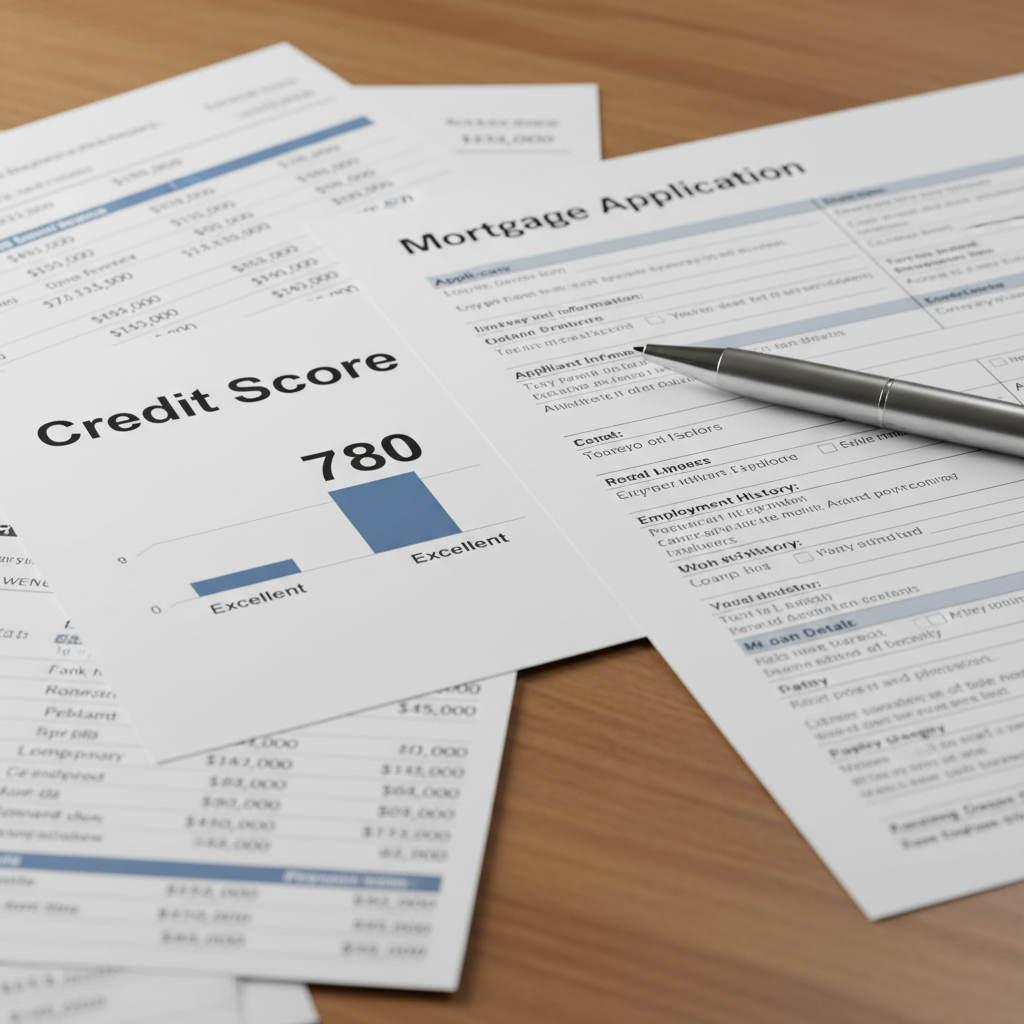
DTI is not evaluated in isolation. Automated underwriting systems look at the full picture — credit score, down payment, reserves, loan-to-value ratio, and DTI together. A borrower with a 780 credit score, 20% down, and six months of reserves may get an automated approval at 48% DTI that a borrower with a 660 score and 5% down would not.
That said, DTI is one of the few factors you can actively manage before you apply. Unlike your credit history, which takes time to change, you can sometimes move your DTI meaningfully in 30 to 90 days by paying down the right accounts.
Before You Apply
If you are planning to buy in the next three to six months, pull your credit report and list every monthly minimum payment. Add up your total monthly debt. Divide by your gross monthly income. That is your current back-end DTI without a mortgage payment.
Then estimate your target housing payment and add it in. If the combined number is above 43%, you have time to work on it before you apply.
If you are not sure where you stand or which loan program fits your situation, that is exactly the kind of conversation worth having before you start writing offers. You can schedule a time to talk with Stephanie — no cost, no obligation.
NMLS Individual #1087365 · NMLS Company #1147207 · CA DRE #01265685. SMS Mortgage is licensed in California and Colorado. Stephanie Pedley holds individual MLO authorizations in Texas through B Walters CO., LLC (NMLS #262157), Ohio through Beacon of Hope Residential LLC (NMLS #2543671), and Nevada through CASMIA HOLDING LLC (NMLS #1740673). Not a commitment to lend. All loans subject to credit approval. Guidelines subject to change.
Explore Topics

Written by
Stephanie Pedley
Mortgage professional and real estate broker with 34+ years of experience in lending, underwriting, and loan strategy. SMS Mortgage is licensed in California and Colorado. Stephanie Pedley holds individual MLO authorizations in Texas, Ohio, and Nevada through sponsorship arrangements. NMLS Individual #1087365 · NMLS Company #1147207 · CA DRE #01265685.