
What Credit Score Do You Actually Need to Get a Mortgage in 2026?
The minimum credit score for a mortgage depends on the loan type — and the minimum to qualify is very different from the score you need to get a competitive rate. Here is what lenders actually look for in 2026.
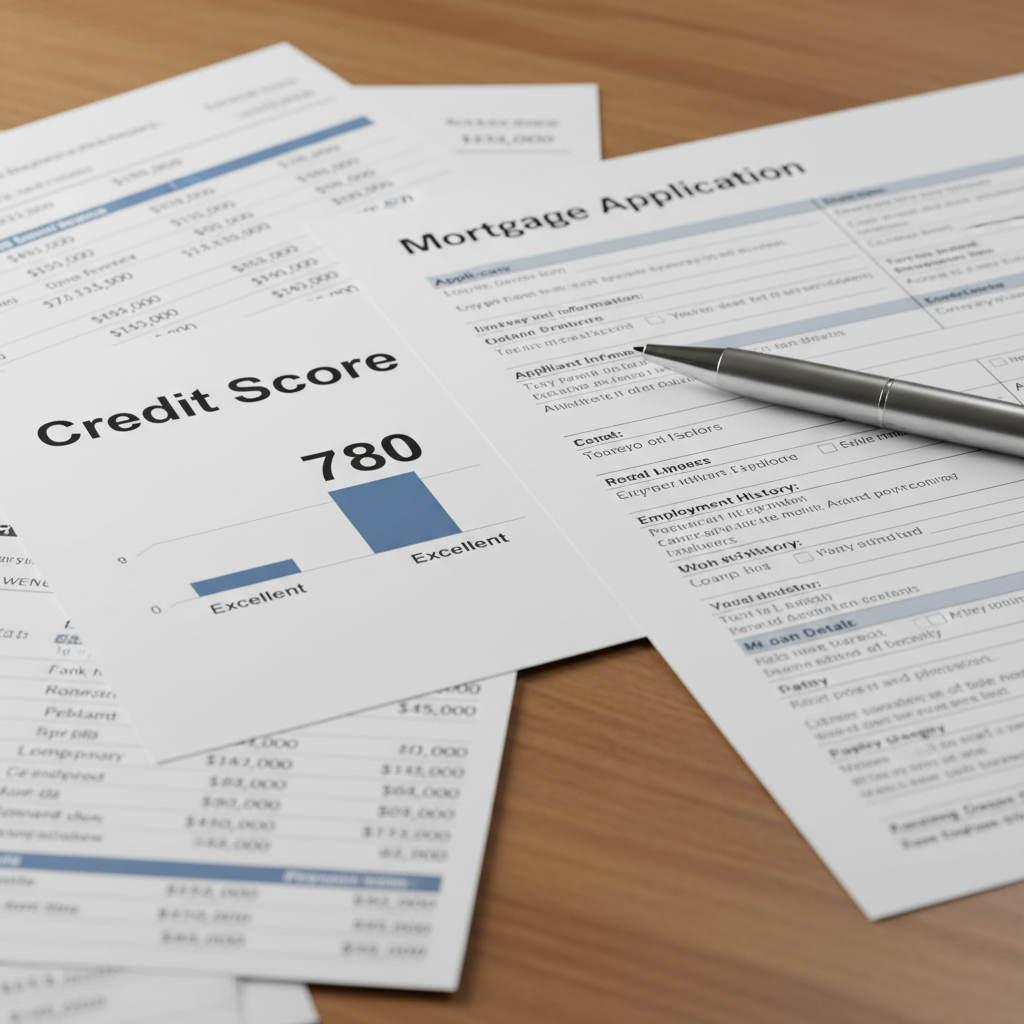
Credit score is one of the most misunderstood parts of mortgage qualification. I hear two versions of the same misconception constantly: borrowers who think their score is too low to qualify for anything, and borrowers who think their score is high enough to get the best rate available. Both groups are often wrong.
Here is what lenders actually look at in 2026, broken down by loan type.
Conventional Loans
Conventional loans — those that conform to Fannie Mae and Freddie Mac guidelines — have a technical minimum credit score of 620. However, the practical reality is more nuanced.
At 620, you will qualify for a conventional loan, but your interest rate will be meaningfully higher than a borrower at 740 or above. Fannie Mae and Freddie Mac use a system of loan-level price adjustments (LLPAs) that add cost to your loan based on your credit score and loan-to-value ratio. The lower your score, the higher the adjustment — and those adjustments translate directly into a higher rate or higher closing costs.
Conventional loan credit score tiers (approximate):
- 760 and above: Best available pricing
- 740–759: Near-best pricing
- 720–739: Modest pricing adjustment
- 700–719: Moderate pricing adjustment
- 680–699: Meaningful pricing adjustment
- 660–679: Significant pricing adjustment
- 640–659: Substantial pricing adjustment
- 620–639: Maximum pricing adjustment; some lenders will not approve
For a conventional loan on a California purchase, the difference in rate between a 620 score and a 760 score can be 0.5% to 1.0% or more — which on a $700,000 loan translates to $250–$500 per month in payment difference.
FHA Loans
FHA loans are insured by the Federal Housing Administration and are specifically designed to serve borrowers with lower credit scores and smaller down payments.
FHA minimum credit scores:
- 580 and above: Eligible for 3.5% down payment
- 500–579: Eligible for 10% down payment
- Below 500: Not eligible for FHA financing
In practice, most FHA lenders impose "overlays" — internal credit standards above the FHA minimum. Many lenders require a 620 or 640 minimum even for FHA loans. However, some lenders do approve FHA loans down to 580, and a mortgage broker can help you find lenders who will work with your specific score.
FHA loans carry mortgage insurance premium (MIP) — both an upfront premium of 1.75% of the loan amount and an annual premium of 0.55%–1.05% depending on your loan term and LTV. This adds to the cost of the loan but makes homeownership accessible to borrowers who cannot qualify for conventional financing.
VA Loans
VA loans — available to eligible veterans, active-duty service members, and surviving spouses — have no official minimum credit score set by the VA. The VA guarantees the loan but leaves credit standards to individual lenders.
In practice, most VA lenders require a minimum score of 580–620. Some lenders will go lower for VA loans given the government guarantee, but this varies significantly by lender.
VA loans have no down payment requirement and no ongoing mortgage insurance, making them one of the most powerful financing tools available for eligible borrowers. If you are a veteran or active-duty service member, a VA loan should be your first consideration regardless of your credit score.
Jumbo Loans
Jumbo loans — those above the conforming loan limits ($1,249,125 in Orange County and Los Angeles County; $1,104,000 in San Diego County; $832,750 in Riverside and San Bernardino Counties for 2026) — are held by lenders rather than sold to Fannie Mae or Freddie Mac, which means lenders set their own standards.
Most jumbo lenders require a minimum credit score of 700–720, with many preferring 740 or above. Jumbo loans also typically require larger down payments (10%–20%), lower debt-to-income ratios, and more substantial cash reserves than conforming loans.
How Your Score Affects Your Rate — Not Just Your Approval
The most important thing to understand about credit scores and mortgages is that your score does not just determine whether you qualify — it determines what you pay.
On a $600,000 conventional loan in California, the difference between a 680 score and a 760 score might be:
- Rate difference: 0.5%–0.75%
- Monthly payment difference: $200–$300
- Total interest difference over 30 years: $70,000–$100,000
This is why, if your score is in the 680–720 range and you have time before you need to buy, it is worth asking whether a few months of credit improvement could meaningfully change your rate.
What Moves Your Score Before You Apply
Pay down revolving balances. Credit utilization — the percentage of your available revolving credit that you are using — is one of the most impactful factors in your score. Getting utilization below 30% on each card, and ideally below 10%, can produce meaningful score improvement within 30 to 60 days.
Do not close old accounts. Closing a credit card reduces your available credit and can increase your utilization ratio. Keep old accounts open even if you do not use them.
Do not apply for new credit. Each hard inquiry from a new credit application can reduce your score by a few points. Avoid applying for new credit cards, auto loans, or other financing in the months before your mortgage application.
Dispute errors. Review your credit reports from all three bureaus (Equifax, Experian, TransUnion) at AnnualCreditReport.com. Errors — including accounts that are not yours, incorrect balances, or late payments that were actually on time — can be disputed and corrected, sometimes producing significant score improvement.
Address collections. Unpaid collections can significantly suppress your score. Depending on the collection type and amount, paying or settling a collection may or may not improve your score — the impact varies. Talk to a mortgage professional before paying off old collections, as the strategy matters.
The Bottom Line
The minimum score to qualify for a mortgage ranges from 500 (FHA with 10% down) to 720+ (jumbo). But the score that gets you the best rate on a conventional loan is 760 or above. If your score is below that threshold, understanding exactly where you are and what it would take to improve is worth doing before you apply.
If you are preparing to buy in California, Colorado, Ohio, or Texas and want to know exactly where your credit stands and what loan options are available to you, contact us or schedule a conversation. We will pull your credit, review your full picture, and tell you exactly what you qualify for today — and what you could qualify for with a few months of preparation.
Sources: Fannie Mae Selling Guide; FHA Single Family Housing Policy Handbook; VA Lenders Handbook; FHFA 2026 conforming loan limits.
NMLS Individual #1087365 · NMLS Company #1147207 · CA DRE #01265685. SMS Mortgage is a licensed mortgage broker in California and Colorado. Stephanie Pedley holds individual MLO authorizations in Texas through B Walters CO., LLC (NMLS #262157), Ohio through Beacon of Hope Residential LLC (NMLS #2543671), and Nevada through CASMIA HOLDING LLC (NMLS #1740673). Not a commitment to lend. All loans subject to credit approval. Credit score requirements and rate adjustments are subject to change and vary by lender.
Explore Topics

Written by
Stephanie Pedley
Mortgage professional and real estate broker with 34+ years of experience in lending, underwriting, and loan strategy. SMS Mortgage is licensed in California and Colorado. Stephanie Pedley holds individual MLO authorizations in Texas, Ohio, and Nevada through sponsorship arrangements. NMLS Individual #1087365 · NMLS Company #1147207 · CA DRE #01265685.