Fake Lender Ads: How Scammers Impersonate Real Companies Online
The FTC is warning consumers about imposter ads that mimic real businesses online. Mortgage borrowers are a prime target. Here is how to spot them and protect yourself.

Fake Lender Ads: How Scammers Impersonate Real Companies Online
The Federal Trade Commission issued a consumer alert on November 2, 2026, asking people to report imposter ads — online advertisements that mimic the look, name, and branding of legitimate businesses to deceive consumers. The FTC's warning addresses business and government impersonation advertisements broadly; it is not specific to mortgage lenders. But the tactics it describes — fake ads that impersonate real businesses, misleading offers, and requests for personal information — are directly relevant to mortgage borrowers. The mortgage industry has been a consistent target for this type of fraud, and borrowers who are actively shopping for a loan are particularly vulnerable.
How Imposter Ads Work
Imposter ads are online advertisements — on search engines, social media platforms, or other websites — that are designed to look like they come from a legitimate, well-known company. They may use the company's actual name, logo, or branding. They may appear at the top of search results when someone searches for that company by name.
When a consumer clicks the ad and contacts the number or fills out the form, they are not reaching the real company. They are reaching a scammer who is using the company's identity to collect personal information, charge fees, or commit fraud.
In the mortgage context, this can look like:
- A search ad that appears to be from a well-known lender or mortgage company, but leads to a fraudulent website
- A social media ad offering unusually low rates or guaranteed preapprovals, using a real company's name or logo
- A website that closely mimics a legitimate lender's site, with a slightly different URL
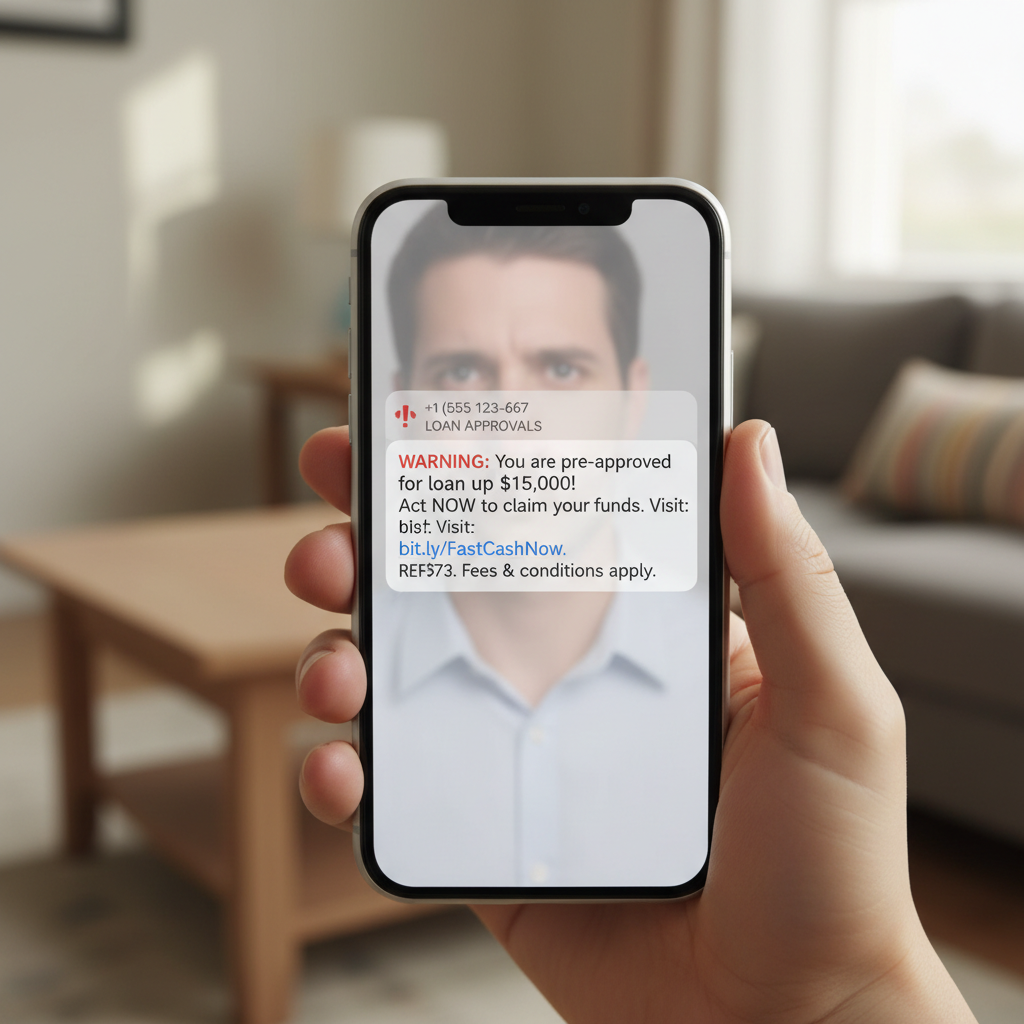
- An email or text that appears to come from a real lender, asking you to click a link or provide personal information
Why Mortgage Borrowers Are a Target
Mortgage borrowers are an attractive target for impersonation scams for several reasons.
The transaction involves large amounts of money and significant personal financial information — Social Security numbers, income documents, bank statements, tax returns. A scammer who successfully impersonates a lender can collect all of that information under the guise of processing a loan application.
Borrowers who are actively shopping for a mortgage are often in a time-sensitive situation. They may be in contract on a home with a closing deadline, or they may be anxious to lock a rate before it moves. That urgency can make it harder to slow down and verify who you are actually dealing with.
And the mortgage process itself involves multiple parties — lenders, brokers, title companies, escrow officers — which creates more opportunities for impersonation at different points in the transaction.
How to Verify a Mortgage Lender Before You Share Anything
The most important protection is verification before you provide any personal information. Here is how to do it:
Check NMLS Consumer Access. The Nationwide Multistate Licensing System (NMLS) Consumer Access database includes information about licensed and federally registered mortgage entities and individuals. You can search for any lender or loan officer by name, company, or NMLS number. Keep in mind that NMLS includes both state-licensed and federally registered entities — the absence of a state license does not by itself prove fraud, but a mismatch between the NMLS number provided and the name being used is a serious red flag worth investigating further.
Go directly to the company's website — do not click the ad. If you see an ad for a lender you want to contact, do not click the ad. Instead, open a new browser window and type the company's website address directly, or search for the company's official website and verify the URL carefully before clicking. Scam websites often use URLs that are close to the real company's URL but slightly different.
Call the number on the official website, not the number in the ad. If you want to contact a lender, find their phone number on their verified official website. Do not call the number in an ad you are not sure about.
Be skeptical of unusually low rates or guaranteed approvals. Legitimate lenders cannot guarantee approval before reviewing your financial information. Offers that seem too good to be true — rates significantly below market, guaranteed preapprovals with no documentation — are a warning sign.
Do not provide personal financial information before you have verified who you are dealing with. A legitimate lender will not pressure you to provide your Social Security number, bank account information, or tax documents before you have had a chance to verify their identity and licensing.
What to Do If You Think You Have Encountered a Fake Ad
If you encounter an ad that you believe is impersonating a legitimate business, you can report it to the FTC at ReportFraud.ftc.gov. The FTC is specifically asking for these reports as part of its current effort to understand and address the problem.
If you believe you have already provided personal information to a fraudulent lender, take these steps promptly:
- Place a fraud alert or credit freeze with each of the three nationwide credit bureaus (Equifax, Experian, TransUnion). A credit freeze must be requested separately from each bureau — it is not automatically applied across all three when you contact one. An initial fraud alert, by contrast, can be requested through one nationwide bureau and that bureau is required to notify the others. A credit freeze restricts new credit from being opened in your name, but it does not prevent all forms of identity theft. For more on how credit freezes work and how they interact with mortgage applications, see our article on credit freezes and mortgages.
- Monitor your credit reports for unauthorized accounts or inquiries.
- Report the incident to the FTC at IdentityTheft.gov, which provides a personalized recovery plan.
- Contact your bank and any financial institutions where you have accounts.
A Note on SMS Mortgage
SMS Mortgage is a licensed mortgage broker in California and Colorado. Stephanie Pedley is NMLS #1087365. SMS Mortgage is NMLS #1147207. You can verify both at nmlsconsumeraccess.org. Our website is smsmtg.com. If you ever receive a communication that claims to be from SMS Mortgage and something feels off, call us directly at (949) 888-6000 to verify.
This article is for general educational purposes and does not constitute financial or legal advice. The FTC consumer alert referenced in this article was issued November 2, 2026, and is available at consumer.ftc.gov/consumer-alerts. Contact SMS Mortgage directly with any questions about our licensing or identity. SMS Mortgage is a licensed mortgage broker in California and Colorado. Stephanie Pedley holds individual MLO authorizations in Texas and Ohio through sponsorship arrangements, and in Nevada through sponsorship with CASMIA HOLDING LLC (NMLS #1740673). NMLS Individual #1087365 · NMLS Company #1147207 · CA DRE #01265685. Equal Housing Opportunity.
Explore Topics

Written by
Stephanie Pedley
Mortgage professional and real estate broker with 34+ years of experience in lending, underwriting, and loan strategy. SMS Mortgage is licensed in California and Colorado. Stephanie Pedley holds individual MLO authorizations in Texas, Ohio, and Nevada through sponsorship arrangements. NMLS Individual #1087365 · NMLS Company #1147207 · CA DRE #01265685.