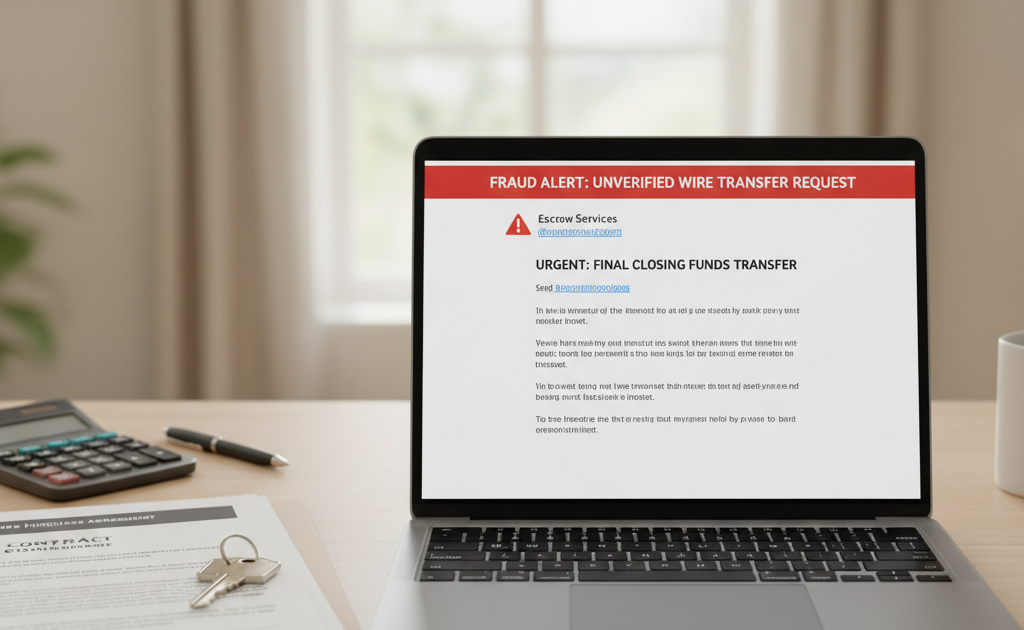
Fake Loan Approval Texts and Mortgage Scams: What to Watch For Right Now
Scammers are sending fake mortgage pre-approval texts to steal your personal information. Here is how to spot them before they cause real damage.
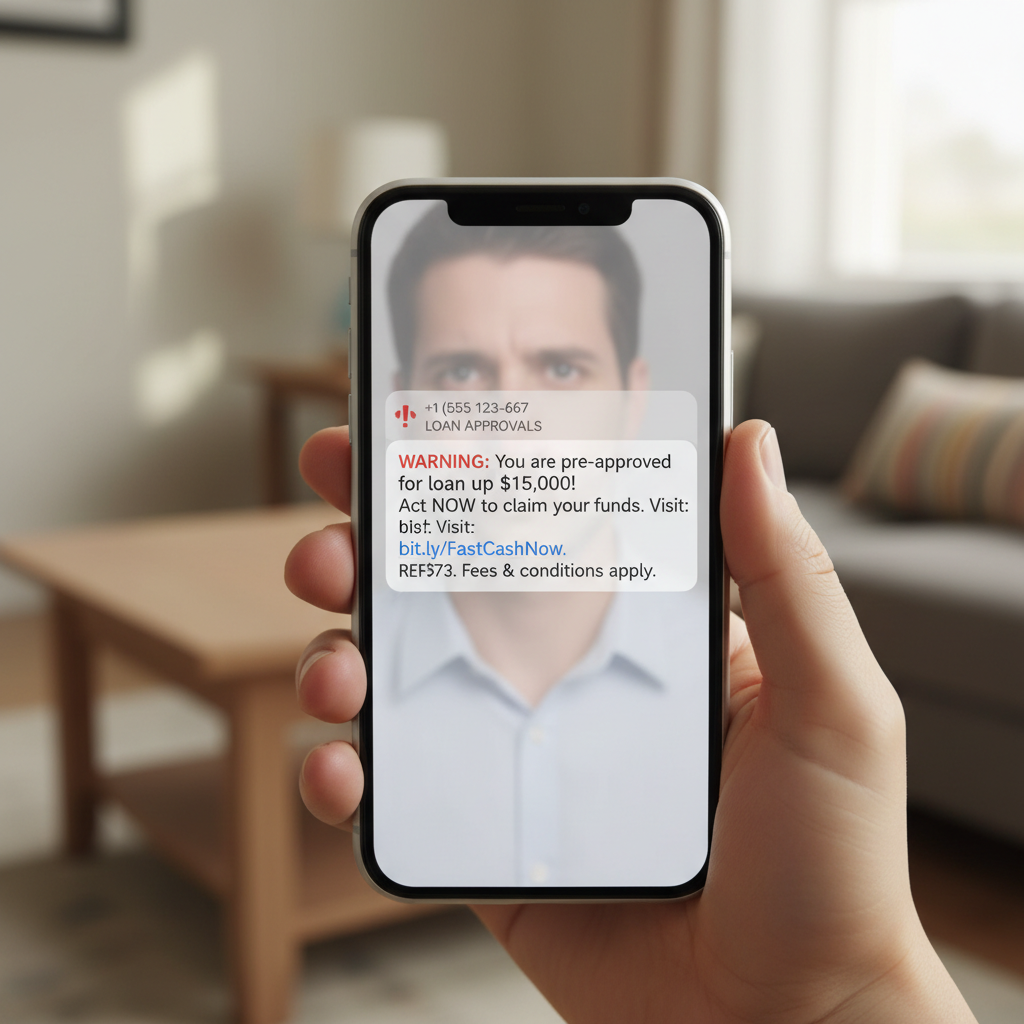
If you have been shopping for a mortgage — or even just browsing home listings online — there is a reasonable chance you have already received one: a text message telling you that you are pre-approved for a mortgage, often with a dollar amount, a suspiciously low rate, and a link to "claim your offer."
These messages are scams. And they are getting more sophisticated.
The Federal Trade Commission has consistently flagged fake loan approval texts and impersonation scams as among the most active forms of financial fraud targeting consumers. The CFPB has issued similar warnings. Here is what these scams look like, why they work, and what you should do if you receive one.
What These Scams Look Like
Fake mortgage approval texts typically share a few common characteristics:
Unsolicited contact. A legitimate lender does not text you out of nowhere to tell you that you are pre-approved. Pre-approval requires an application, income documentation, a credit pull, and a review of your financial profile. No lender can pre-approve you without that information.
Urgency and artificial deadlines. "This offer expires in 24 hours." "You must respond today to lock your rate." Scammers use urgency to prevent you from thinking carefully or verifying the source.
Unusually low rates or large loan amounts. If the rate in the text is significantly below current market rates, that is a red flag. Scammers use attractive numbers to get your attention and lower your guard.
A link to an unfamiliar website. The link may look legitimate at a glance — it might include words like "mortgage," "home," "loan," or even a name that sounds like a real lender — but the actual domain is unrelated to any licensed mortgage company.
Requests for personal or financial information. Once you click through, the fake site typically asks for your Social Security number, date of birth, income, bank account information, or other sensitive data. This is the actual goal: identity theft or financial fraud.
Why These Scams Are Effective
Mortgage scam texts work for a few reasons.
First, many people who receive them are actively looking for a mortgage. If you have been searching for homes, talking to lenders, or filling out online inquiry forms, receiving a "pre-approval" text does not feel entirely out of place.
Second, the texts often arrive with partial personal information — your first name, a reference to your city, or a loan amount that roughly matches what you might be looking for. This information is frequently purchased from data brokers or harvested from online forms, and it makes the message feel more credible than a generic blast.
Third, the emotional stakes of homebuying are high. Buyers who are worried about qualifying, frustrated by rate increases, or anxious about competition are more vulnerable to a message that seems to offer a solution.
What Scammers Do With Your Information
If you click the link and enter your information, several things can happen:
- Your Social Security number can be used to open fraudulent credit accounts, file false tax returns, or apply for loans in your name
- Your bank account information can be used for unauthorized withdrawals or ACH fraud
- Your personal data can be sold to other scammers
- You may be enrolled in fake "loan processing" schemes that charge upfront fees for services that do not exist
Upfront fee scams are particularly common in the mortgage space. The FTC has taken enforcement action against companies that charged consumers hundreds or thousands of dollars in "processing fees," "insurance fees," or "rate lock fees" before disappearing without providing any loan.
Legitimate mortgage lenders do not charge upfront fees before a loan is approved and you have agreed to proceed. Application fees and appraisal fees are standard — but they come after you have applied, reviewed a Loan Estimate, and chosen to move forward. Any demand for payment before you have a signed Loan Estimate is a serious warning sign.
How to Verify Whether a Lender Is Real
If you receive a text or call from someone claiming to be a mortgage lender and you are not sure whether it is legitimate, here is how to check:
Look up the NMLS number. Every licensed mortgage lender and loan officer in the United States is required to be registered in the Nationwide Multistate Licensing System (NMLS). You can search the NMLS Consumer Access database at nmlsconsumeraccess.org to verify that a company and individual are actually licensed in your state.
Do not use the contact information in the text. If you want to follow up with a lender who contacted you, find their contact information independently — through their official website, the NMLS registry, or a direct search — rather than using the phone number or link in the message.
Check state licensing. In California, mortgage brokers and lenders are licensed through the Department of Financial Protection and Innovation (DFPI). You can verify a license at dfpi.ca.gov. Colorado, Ohio, and Texas have equivalent state licensing databases.
Search the FTC and CFPB complaint databases. If a company has a history of consumer complaints, it will often appear in the CFPB complaint database at consumerfinance.gov/data-research/consumer-complaints.
What to Do If You Received One of These Texts
If you received a suspicious mortgage text:
- Do not click the link. Even visiting the site can expose your device to malware in some cases.
- Do not call the number in the text. Calling confirms your number is active and can lead to escalating contact.
- Report it to the FTC at reportfraud.ftc.gov. Reports help the FTC identify patterns and take enforcement action.
- Report it to the CFPB at consumerfinance.gov/complaint if it involves a financial product or service.
- Forward the text to 7726 (SPAM) — this reports it to your carrier.
- If you already clicked and entered information, place a fraud alert or credit freeze with all three credit bureaus (Equifax, Experian, TransUnion) immediately. You can do this for free at each bureau's website. For more on how a credit freeze works and how it affects a mortgage application, see our article on credit freezes and mortgage applications.
The Difference Between a Scam Text and a Legitimate Lender Reaching Out
Legitimate mortgage lenders do reach out to consumers — through advertising, referrals, and follow-up on inquiries you have already submitted. Here is how to tell the difference:
A legitimate lender will not pressure you to respond within hours. They will provide their NMLS number without being asked. They will not ask for your Social Security number or bank account information via text or an unsecured web form. They will provide a Loan Estimate before asking for any fees. And they will be verifiable in the NMLS registry.
If you are working with a licensed mortgage broker and want to verify their credentials, ask for their NMLS number and look it up. Any legitimate professional will welcome that question.
If you have questions about the mortgage process or want to work with a licensed broker in California or Colorado, contact us or schedule a conversation.
NMLS Individual #1087365 · NMLS Company #1147207 · CA DRE #01265685. SMS Mortgage is a licensed mortgage broker in California and Colorado. Stephanie Pedley holds individual MLO authorizations in Texas through B Walters CO., LLC (NMLS #262157), Ohio through Beacon of Hope Residential LLC (NMLS #2543671), and Nevada through CASMIA HOLDING LLC (NMLS #1740673). Not a commitment to lend. All loans subject to credit approval.
Explore Topics

Written by
Stephanie Pedley
Mortgage professional and real estate broker with 34+ years of experience in lending, underwriting, and loan strategy. SMS Mortgage is licensed in California and Colorado. Stephanie Pedley holds individual MLO authorizations in Texas, Ohio, and Nevada through sponsorship arrangements. NMLS Individual #1087365 · NMLS Company #1147207 · CA DRE #01265685.